BLOG · 10 September 2026
How an AI Commercial Comes Together: The Process from the Brand's Side
From brief and references to character consistency, rough-cut approval and delivery: what a brand should expect at each stage of an AI commercial.
Most brand managers who ask for an AI commercial already know these tools can produce impressive images, but the process itself can still get confusing. AI productions work differently from conventional ones. What will the first image look like? How will art direction, costume, hair and make-up work? How is the cast chosen? Up to which point can a change still be made? These are worth knowing well.
In films with no set at all, a 100% AI production, most mistakes can be fixed at a lower cost. But time is money, and on a job with a deadline it pays to see mistakes coming and keep them to a minimum. This post walks through the stages a brand usually goes through when working with Sceneva Labs, and what is worth paying attention to at each one.
The brief: say what the film is for, not only what it shows
A good brief for an AI commercial isn't very different from a good brief for any commercial. Where will the film run, how long is it, who is it for, and what should the viewer remember a day later? Then add the hard limits: the colors, objects, fabrics and sounds you want to use, and the ones you don't. The earlier these limits are written down, the faster and smoother the process runs. A late "that won't work" usually means redoing several shots from scratch, and it can cost serious time.
Two things matter more than usual. First, say from the start what has to be exact and what is open to interpretation. A product's shape, label and color usually have to be exact. A street, a kitchen or the light at dusk can often be built from scratch. Second, say early if real people are involved. A brand face, an employee or someone well known changes the approach; the producer and the director plan how that person will be filmed or appear in the film, and which permissions are needed.
References and boards
References decide a lot about how an AI commercial turns out. Words like "warm" or "premium" mean something different to everyone. Three frames from films, ads or photographs you like can settle that discussion in seconds. Sending one or two examples of what you don't want helps a lot too. It's fine to show ads from competing brands as references, but say what you like about them: the light, the edit, the way the actor carries themselves?
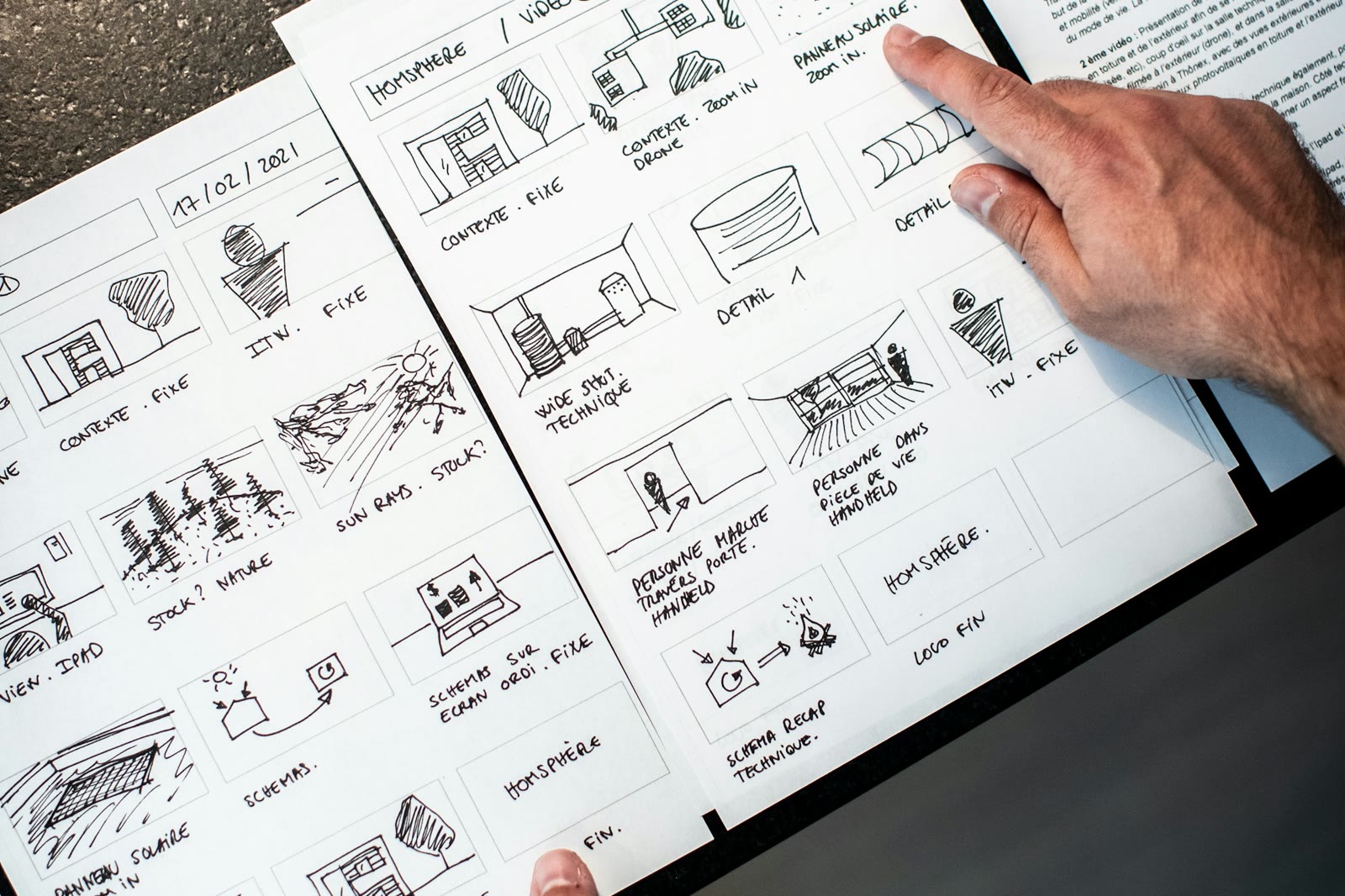
From there, the director builds the visual language of the film: color palette, lens feel, light, texture, how the camera moves. This is usually presented as style frames and a storyboard, still images showing what each shot will be. For the brand, this is the cheapest moment to change your mind. Rewriting a scene at storyboard stage takes a few hours. Rewriting it once the shots are animated costs much more and loses serious time.
Keeping characters and products consistent
The biggest technical issue in AI video production is consistency. A character whose face changes from shot to shot, a bottle whose label drifts slightly from scene to scene, or warped lettering can ruin the whole thing.
There is more than one known fix. For the product, working from high-resolution photos or 3D files of the real item, and checking logos and text closely, is often a lifesaver. As a brand, the most useful thing you can do is send clean product images early and look hard at these pages. Once a character or product is approved, every later shot is built on it. A detail missed here can spread through the whole film.
It's also worth knowing an honest limit: fine text, small print on packaging and complex logos are still what generative models struggle with most. In cases like these, VFX and compositing usually give a more precise result. Make sure you ask how this will be done for your product.
The rough cut: low resolution, no music, on purpose
Before anything is polished, you will usually see a rough cut: the whole film in order, at low resolution, often without music or final sound. It may feel a little flat the first time. Don't get stuck on that; just decide whether the generated images are what you wanted, and hold your notes on the edit and everything else for later. Rough-looking images don't mean the film will stay that way; those parts are left for the end on purpose. At this stage the questions should mostly be about the images. Does it look artificial? Does it reflect the brand well? Does the idea land?
Approving the structure on a rough cut makes everyone's workflow easier. The expensive steps, upscaling, final sound and color, are also easier to do on a film whose shape is already settled.
Revisions and delivery
Revisions in an AI commercial work best when they are gathered into one round and given with timecodes. Changing a single shot can be quick. Changing something that runs through the whole film, such as the character's clothes or the time of day, can mean regenerating many shots. So it makes sense to ask what a change will cost before you ask for it. Agree upfront on how many revision rounds are included and what counts as a new direction rather than a revision.
What makes the process run smoothly
Looking at the whole path, a few habits on the brand side make the biggest difference:
- A single decision-maker, or a small team that agrees internally before giving feedback.
- References instead of adjectives.
- Product images supplied at the very start, not halfway through.
- Big changes at storyboard stage, small ones later, before finishing.
- Feedback by shot and timecode makes the process clearer.
None of this is specific to AI, really; every commercial job that goes well has similar habits. The difference is this: in AI video production, the cost of a late decision isn't as visible as a shoot day, but it still gets paid. An AI commercial can move faster than a classic production, but that speed comes from clear decisions, not from the tools alone. When the brief, the references and the approvals are in place, the director has room for what a good commercial really needs: telling a good story!
Photos: Peter Stumpf / Unsplash · dix sept / Unsplash
BLOG
See all →
14 October 2026
Vibe Coding for Production Teams: Building Your Own Tools with AI
What vibe coding does for small teams and where it needs care. At Sceneva Labs, we build apps that make our own work easier.
29 September 2026
Realism and Continuity in AI Video: Keeping Characters, Products and Light Consistent
Why characters, products and light drift between shots in AI video, and how professional AI video production keeps every scene consistent.